
As the demand for high-capacity, high-power density energy storage grows, liquid-cooled energy storage is becoming an industry trend. Liquid-cooled battery modules, with large capacity, many cells, and high system voltage, require advanced Battery Management Systems (BMS) for real-time data collection, system control, and maintenance.
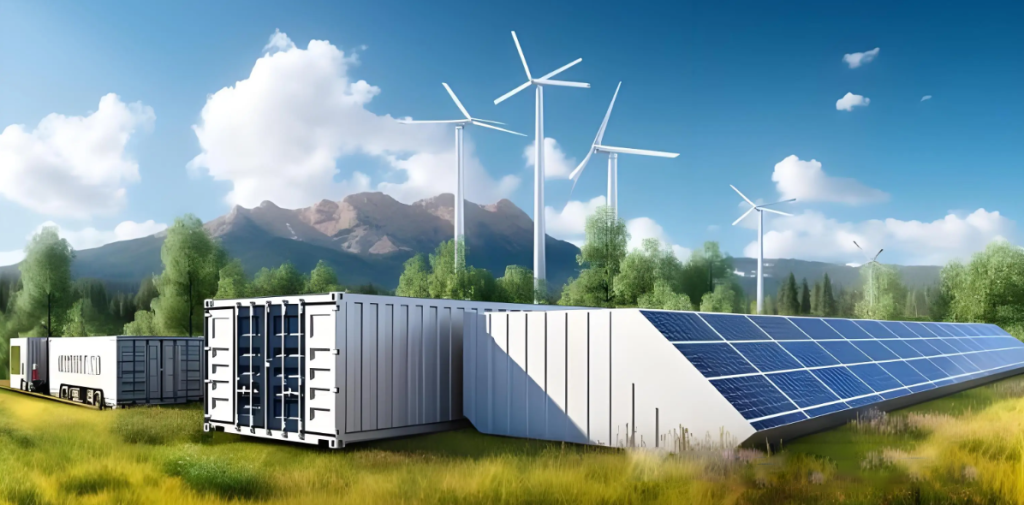
1. Advantages of Liquid-Cooled Energy Storage Systems
Currently, there are two main types of battery storage systems: air-cooled and liquid-cooled. Air-cooled systems require many fans and large heat dissipation channels, which take up a lot of space.
Liquid-cooled energy storage systems can replace small modules with larger ones, reducing space and footprint. As energy storage stations grow in size, liquid cooling is becoming more popular because it has higher cooling efficiency, lower energy consumption, and larger capacity. This makes it a key trend in the industry.
The BMS plays a crucial role in ensuring that the batteries operate safely. Problems like overcharging, over-discharging, or temperature issues can shorten battery life and increase maintenance costs. Liquid-cooled battery modules, with their large capacity, many cells, and high voltage, require a sophisticated BMS for real-time monitoring and easy maintenance.
2. System Architecture Design
The liquid-cooled energy storage system integrates the energy storage converter, high-voltage control box, water cooling system, fire safety system, and 8 liquid-cooled battery packs into one unit. Each battery pack has a management unit, and the high-voltage control box contains a control unit. The control unit is the heart of the system, coordinating the converter, cooling, and fire safety systems while collecting data from all the battery packs.
3. BMS Hardware Design
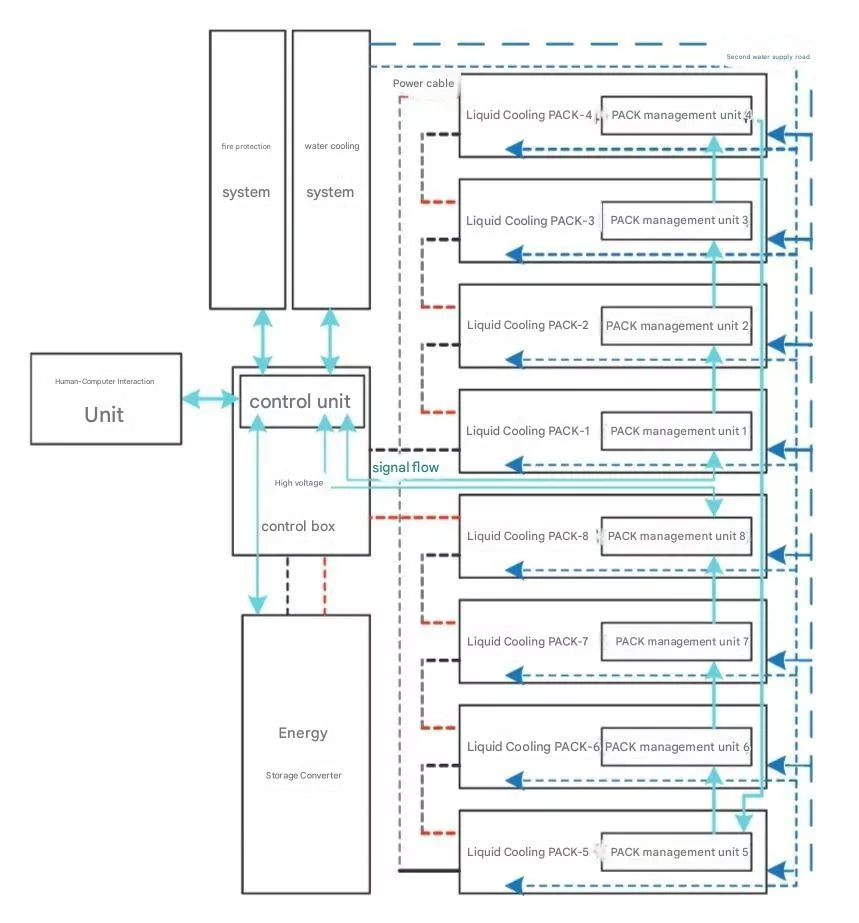
The BMS is designed in two layers: the first layer is the liquid-cooled battery pack management unit, and the second is the control unit. The control unit is located in the high-voltage control box and has a user interface that can connect to a mobile app via Bluetooth or a PC via Ethernet.
1. Liquid-Cooled Battery Pack Management Unit
Each liquid-cooled battery pack contains 3-4 times more cells than air-cooled packs. Each management unit monitors the voltage and temperature of 52 individual cells in real-time and manages balancing and temperature control based on system needs. Every pack is an independent unit within the system.
2. Control Unit
The control unit collects data on the voltage and temperature of each cell and the overall system. It calculates the state of charge (SOC) and health of the battery pack by combining this data. The control unit ensures the system runs smoothly and safely.
3. High-Voltage Control Box
Each system includes a high-voltage control box that connects the converter to the liquid-cooled battery packs. The control box has fuses and switches to ensure safe operation and collects data on the system’s current. It also integrates a control unit to manage the whole system.